A modern reframing of what it means to live counter-cultural lives.
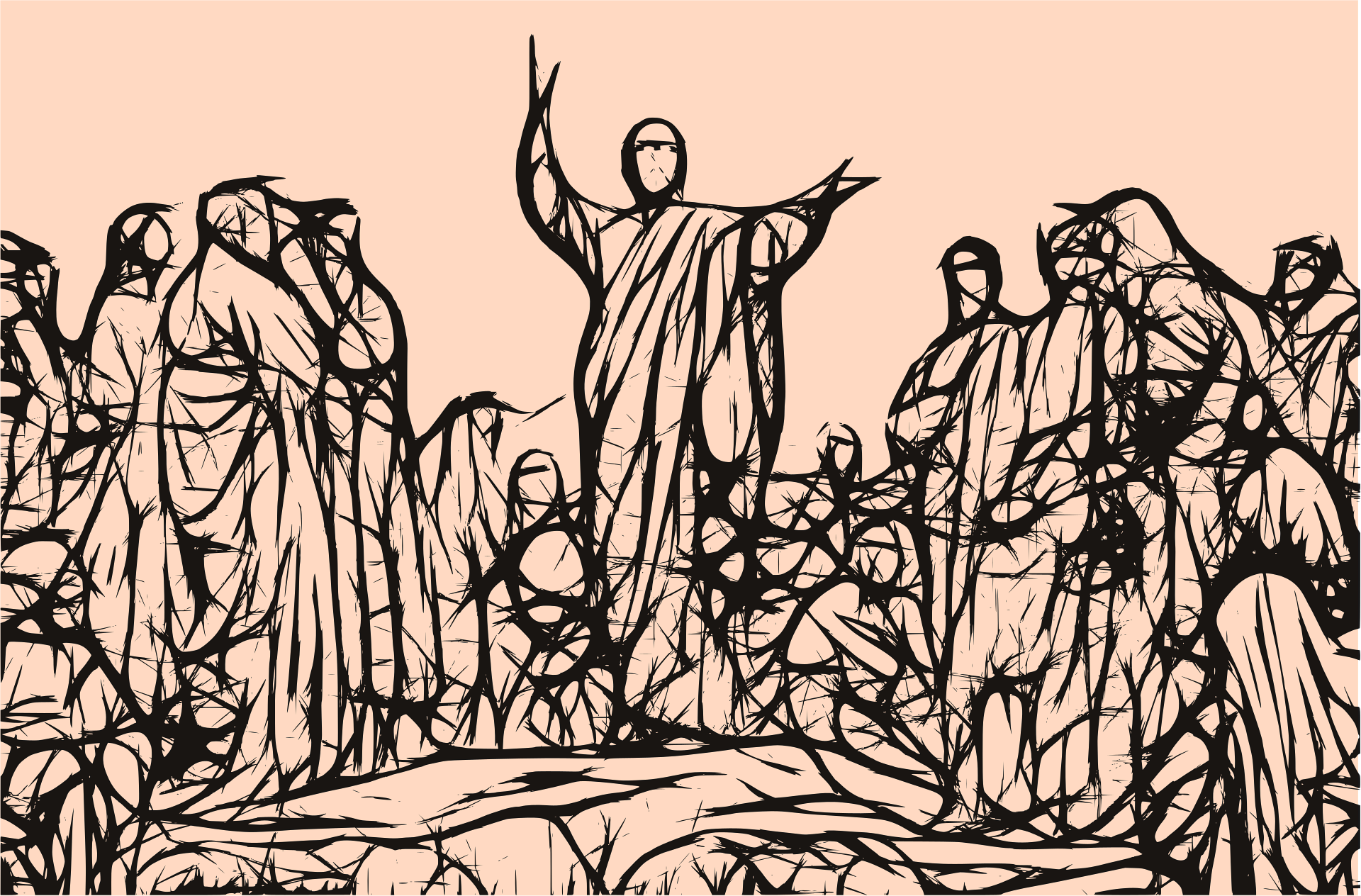
When Jesus delivered his sermon on the mount, he wasn’t living in a cultural vacuum. His audience lived in a dynamic period of history, one shaped by a blend of Jewish tradition, Hellenistic (Greek) culture, and Roman political and military rule. These overlapping cultural forces created a daily life that was highly structured, deeply communal, and forced people to constantly balance between Jewish religious devotion, Greek social customs, as well as serving Roman Imperial Rule. It was a complex world to navigate.
A regular person in Jesus’ day likely spoke Aramaic at home, used Greek (Koine) to buy goods at the market or speak with officials, and heard Hebrew during scripture readings at the synagogue.
There were also multiple currencies to deal with—Greek drachmas for trade, special Jewish shekels required for the Temple tax, and Roman denarii for paying imperial taxes. The taxation system itself was complex—and often open to corruption.
The majority of people were obligated to give a percentage of their grain, wine, and oil to support the Temple and the priestly class in Jerusalem. On top of these religious tithes, Roman tax collectors extracted heavy land taxes, toll taxes, and poll taxes, which frequently drove families into severe debt or forced them to sell their land.
But it wasn’t just the day to day aspects of life that had to be navigated. There were also social hierarchies and structures to adhere to.
Every daily interaction—from where you sat at a dinner party to how you greeted a neighbour—was carefully calculated to protect family honour and avoid public shame. Social life was a constant series of public challenges. If someone insulted you or questioned your status, you had to respond effectively or face shame, which ruined not just your reputation, but your entire family’s social and economic standing.
Sociologists estimate that over 90% of the population in Jesus’ day lived at or near subsistence level, while a small minority of elite controlled almost all the wealth and political power.
The Ruling and Governing Elite (Top 1–2%): This included Roman governors (like Pontius Pilate), the Herodian royal family, Roman administrators, and the chief priests in Jerusalem. They lived in luxury, controlled the land, and collected taxes.
The Retainers and Attendants (Sub-Elite): Bureaucrats, military officers, legal experts (scribes), and wealth managers (bankers, brokers) who served the elite and enforced their will.
The Urban/Rural Merchants and Artisans (Skilled Workers): A small group of self-sufficient workers, including shopkeepers, carpenters (like Joseph and Jesus), stonecutters, and boat owners.
The Peasant Farmers and Fishermen (The Majority): The backbone of the economy. They worked small family plots or fished the Sea of Galilee, constantly vulnerable to bad harvests, debts, and high taxes.
The Expendables and Marginalised (Bottom): Tenant farmers who lost their land, day labourers, beggars, slaves, and the chronically ill or disabled. They had no social safety net.
For Jewish people, social standing was also dictated by ritual and moral purity. These divisions were outlined in the Torah, but greatly expanded on—and often abused—by some of the religious leaders. This created a clear social boundary of who was “in” and who was “out.” There were three main levels in this religious hierarchy:
The Temple Elite: The High Priest sat at the absolute top of Jewish society, wielding immense religious and political power. Priestly families were the aristocracy.
The Clean vs. The Unclean: For the majority of people, life was a constant battle to stay “ceremonially and ritually clean”. Regular contact with the sick, dead bodies, or certain occupations (like tanning hides or shepherding—which made keeping the law difficult) pushed people to the margins.
The Outcasts: Tax collectors were despised as traitors because they worked for Rome and routinely extorted money. “Sinners” referred not just to moral failures, but to anyone who couldn’t or wouldn’t keep the strict purity laws.
Inverting the Cultural Norms
WhenJesus used his culture-defining sermon to deliberately invert the dominant social, political, and religious frameworks of the first-century Greco-Roman and Jewish worlds, he intentionally challenged four core cultural pillars that dictated daily life for the ordinary people listening to him.
The Honour-Shame Culture: In the first century Mediterranean world, honour was the ultimate currency, and shame was the ultimate dread. Honour was determined by public perception and tied directly to status indicators like lineage, wealth, social connection, and physical dominance.
World View: To be poor, grieving, or subjugated was a visible sign of being cursed or shamed by the gods.
Kingdom View: Jesus uses the word Blessed (Greek: Makarios), which in an honour-shame context can be translated as “How honourable…”. By declaring that the “poor in spirit,” the “meek,” and the “persecuted” are the truly honourable ones, he strips society of its power to define human worth and states that true honour is bestowed by God alone.
Pax Romana (The Ideology of Imperial Peace): The Roman Empire actively promoted the ideology of the Pax Romana (Roman Peace). However, this “peace” was not built on harmony; it was peace achieved through violent conquest, subjugation, and military intimidation. The Roman elite believed that order was maintained by being stronger, more aggressive, and more ruthless than your opponents.
World View: Might makes right. True peace is the absence of rebellion, achieved by crushing dissent.
Kingdom View: Jesus asserts that the “meek shall inherit the earth” and calls the “peacemakers” the children of God. He elevates non-retaliatory strength (meekness) over Roman military might, suggesting that true flourishing comes from reconciling relationships, not imposing dominance.
The Meritocracy (the ruling elite) of Wealth and “Divine Favour”: A prevailing worldview among both Roman pagans and many first-century religious elite was that material wealth and health were direct proof of divine favour. If you were rich, you were being rewarded for your righteousness or greatness; if you were poor or sick, you were paying for your sins or structural unworthiness.
World View: Prosperity is a validation of righteousness. The wealthy elite deserve their platforms and authority.
Kingdom View: Jesus opens his sermon by blessing the “poor in spirit” and those who “hunger and thirst”. He decouples material status from spiritual standing. He targets a system that weaponised piety for social gain, offering the kingdom to those who have nothing to offer but their reliance on God.
Zealot Nationalism (Violent Revolution): Closer to home, many of Jesus’ Jewish listeners were fiercely gripped by Zealot ideology. The Zealots believed that the only way to usher in God’s kingdom was through bloody, violent revolution to overthrow the Roman occupiers. They expected a Messiah who would arrive with a sword to slaughter their enemies.
World View: God’s kingdom will be established through holy violence, vengeance, and political dominance.
Kingdom View: Jesus deeply offends this nationalist narrative by blessing the “merciful” and those who are “persecuted for righteousness’ sake”. Later in the same sermon, he commands his followers to “love your enemies.” He explicitly rejects the path of bloody rebellion, modelling a revolution of the heart that conquers evil with sacrificial love.
The Ultimate Counter-Ideology
By taking aim at these cultural pillars, Jesus dismantled both Roman pride and religious elitism. Today, this same sermon dismantles the Western myth that our worth equals our net worth, productivity, or social platform. It replaces a culture of relentless self-elevation with a kingdom of radical self-giving.
“Blessed are the poor in spirit…”
Modern Ideology: The Culture of Self-Branding and Self-Sufficiency.
World View: Honoured are the self-made, the influencers, the highly visible, and those who project a flawless, curated lifestyle of absolute confidence.
Kingdom View: “Honoured are those who admit they don’t have it all together, who don’t feel the need to brand themselves, and who openly acknowledge their need for grace, for the Kingdom of Heaven is theirs.”
“Blessed are those who mourn…”
Modern Ideology: Toxic Positivity and the Escapism Economy.
World View: Honoured are those who stay comfortable, optimise their happiness, numb their pain, and swipe away from uncomfortable realities.
Kingdom View: “Honoured are those who allow their hearts to break for the pain of others and the injustices of our world, rather than just scrolling past; they will find true comfort.”
“Blessed are the meek…”
Modern Ideology: The Hustle Culture and “Main Character” Syndrome. (A TIK-TOK term used to describe when someone views themselves as the protagonist of their own life’s movie, treating the people around them as mere background extras or plot devices.)
World View: Honoured are the aggressive, the loud, the disruptors, and those who ruthlessly network and self-promote to get to the top.
Kingdom View: “Honoured are the quiet, the unassuming, and those who refuse to step on others to get ahead; they are the ones who will truly inherit what matters.”
“Blessed are those who hunger and thirst for righteousness…”
Modern Ideology: Virtue Signalling and Apathy.
World View: Honoured are those who perform righteousness for social capital, online likes, or political alignment, without it costing them anything.
Kingdom View: “Honoured are those who deeply ache for genuine justice and personal integrity, even when no one is watching or giving them clicks; they will be deeply satisfied.”
“Blessed are the merciful…”
Modern Ideology: Cancel Culture and Outrage Metrics (the data systems, engagement numbers, and algorithmic rewards that treat human anger, indignation, and moral outrage as the most valuable currency on the internet.)
World View: Honoured are those who are swift to judge, permanently write people off, and use public shaming to elevate their own moral standing.
Kingdom View: “Honoured are those who offer second chances, practice restorative justice, and choose nuance over outrage; they will receive mercy themselves.”
“Blessed are the peacemakers…”
Modern Ideology: The Tribalism of the Culture Wars.
World View: Honoured are those who engage in controversial debate, the talk-show hosts, and the internet commentators who drive engagement by dividing us into “us vs. them.”
Kingdom View: “Honoured are those who build bridges across political and cultural divides, refusing to dehumanise the ‘other side’; they will be called the children of God.”
Living the Inversion
The Beatitudes are not a checklist of rules to follow that might earn us God’s favour—nor are they a to-do-list that guarantees success in this life. Rather, they are a description of what a God surrendered heart looks like when it has been completely transformed by His love.
When we stop chasing the world’s version of power and start embracing Jesus’ radically different path, we find a deep, unshakeable joy (makarios, or “blessedness”) that external circumstances simply cannot steal.
So whenever you find yourself caught up in the modern trap of striving, dominating, or pretending you have it all together, look back at what Jesus has to say. Real, lasting life isn’t waiting for you at the top of the ladder. It is already yours in the beautiful, countercultural freedom of God’s upside-down kingdom.
Prayer:
Father, I lay down my striving and surrender my heart completely to Your love. Forgive me for the times when I chase after the world’s version of power and success. Release me from the pressure to pretend I have it all together.
Jesus, lead me along Your radically different path. Plant Your deep, unshakeable joy within me—a blessedness that no circumstance can steal. I choose to live today in the beautiful, countercultural freedom of Your upside-down kingdom. Amen.
Image credit: Pixabay
Leave a Reply